Luigui Bleand: The Song Did Not Change a Note
Luigui Bleand writes in his diary about the noise that surrounds any work – why the eye goes first to what went wrong, and why a fall can draw more voices than a success – and about his decision not to measure his music by it.
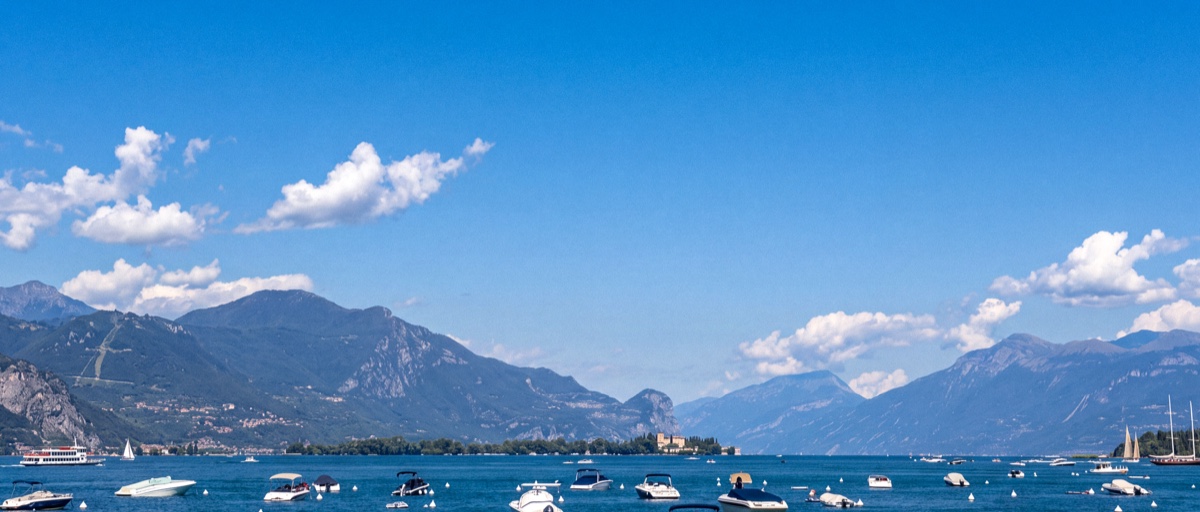 Portofino, Italy
PORTOFINO, ITALY — I have been watching something simple that took me years to accept: whatever I do, someone will have something to say. A song will be too slow for one listener and too bare for another. I do not write this as a complaint. No work reaches everyone in the same way, and I have stopped letting what people say decide the direction of mine.
What I notice most is where attention goes. Many people rarely stop at what was done well; the eye goes first to what went wrong. This is not only my impression. In a well-known 2001 review, “Bad Is Stronger Than Good”, the psychologist Roy Baumeister and colleagues found, across many areas of life, that bad events, bad feedback and bad impressions tend to weigh more than good ones of the same size, with hardly any exceptions. Many good events, they added, can outweigh a single bad one. A mind that has been hurt, I believe, learns to look for the shadow first, and can find it even where there is light. I recognise the tendency in myself.
It helps explain why a negative word so often wins the first glance. In 2023, in Nature Human Behaviour, a team led by Claire Robertson analysed some 105,000 headline variations tested on the website Upworthy: in a headline of average length, each additional negative word raised the click-through rate by 2.3 per cent. The effect is modest, but real. Yet in a 2012 study of three months of New York Times articles, Jonah Berger and Katherine Milkman found that positive content was shared more than negative, and that sharing rose partly with how strongly an article stirred people: awe, anger or anxiety helped, sadness worked against it.
In music I have seen something similar. I have long felt that what provokes draws more eyes, and at times more money, than what is made with restraint. I cannot measure it, and will not make it a rule. The research is narrower. In a 2019 study, Charlotte Brand, Alberto Acerbi and Alex Mesoudi found pop lyrics from 1965 to 2015 growing more negative, with some evidence that more negative lyrics did slightly better in the charts. A sad song can be a beautiful one, so I do not read that as a verdict on anyone’s taste, only as a reminder that what unsettles can reach a little further than what quietly builds.
There is a quieter side to this. Someone who works honestly and is never involved in anything bad is rarely talked about. Steadiness makes little noise. In a 2017 study of online product reviews, Nan Hu, Paul Pavlou and Jie Zhang describe an underreporting bias: people with extreme ratings, positive or negative, are more likely to write a review than those with moderate ones. The loudest voices are rarely the whole room. Many who simply liked a song, or found company in it, never say so.
Then there is the moment of falling. When someone does something very good and succeeds, people applaud. When that person stumbles or fails, some do not merely notice; they celebrate. In 1989 Norman Feather, a psychologist at Flinders University, studied this through the “tall poppy”, as Australians call the high achiever: in his first study, secondary-school students responding to imagined scenarios reported feeling more pleased about a high achiever’s fall than an average one’s. In a 2002 study with Rebecca Sherman, also built on scenarios, he found that pleasure at someone else’s failure was predicted by resentment rather than envy, and that whether the success seemed deserved was key.
I find a certain calm in that. It suggests that the celebration of a fall can say more about how a success was perceived than about the work itself. I have seen it happen. When an artist falls, mockery appears beneath his old songs, sometimes from the very accounts that once applauded them. Between one comment and the next, the song did not change a note.
The same happens with records. A record made with care can come out almost in silence, and that same record is on everyone’s lips the day things go badly for its author. What is heard then is the fall, not the record.
That is why I learnt not to measure my work by the noise. Every song and record I release will be talked about, often for things beyond the music. So I measure by other things: whether a song says what it had to say, whether I was honest while making it, whether I would sign it again tomorrow. That is not indifference. I listen closely to anyone who tells me something true, even when it is uncomfortable, because fair criticism can improve the work. Noise cannot.
People will always say something, and I have made my peace with that. The good that is done does not stop being good because few people mention it, and a fall does not rewrite the work that came before. I would rather keep making songs with care and let them be heard for what they are, whenever that moment comes.