Luigui Bleand: Society Measures You by Where You Stand
Luigui Bleand writes in his diary about how society and the community see you – and the yardstick they measure you by – depending on whether you are in a position to help, need help or are helping; about how you see yourself, what the research says about those different views, and what happens when your place changes and you can no longer help.
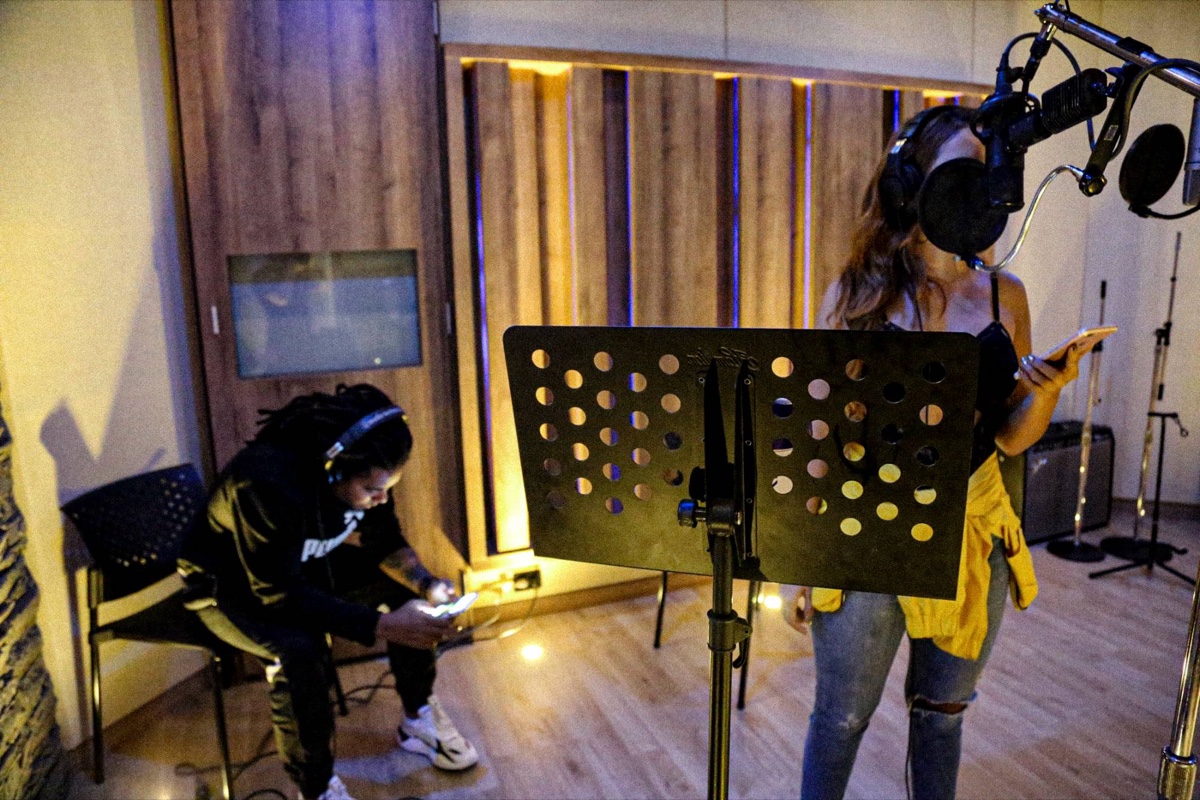 Medellín, Colombia
ROME, ITALY — Before asking a favour, you rehearse it. You go over it in your head, wait for the right moment and start with “sorry to bother you”. Days later, when you are the one being asked, you say yes without thinking, almost gladly. It is the same person; only the place you are looking from has changed. I would say the word “help” runs very deep. But the more I think about it, the more I believe the subject is not help but society: how it sees you, and what yardstick it measures you by, depending on where you stand.
There are several views: yours, the other person’s, and that of society or the community – the smaller group you identify with – each with its own standards. All of them change depending on whether you are in a position to help, need help or are helping. Helping nearly always has something behind it, an obligation, a bond: you help your parents because they are your parents, your brother because he is your brother, your partner because they are your partner. I do not know why, or how, or when, but I help people without expecting anything in return. It is not always so, though: with an equal, you tend to expect something back; with someone in a place from which they could never rise above you, it feels like a good deed, like charity. I see myself as someone incapable of gaining anything through conflict; I want my own benefit to come naturally, never from something that does harm. Though I recognise that few human beings know how to perceive themselves.
I start with the most uncomfortable place: needing help. In 2022, in Psychological Science, the researchers Xuan Zhao and Nicholas Epley published six experiments with 2,118 adults in the United States. In one, in a botanical garden, 50 visitors asked a stranger to take their photo. On a scale from 0 to 10, those asking expected, on average, a willingness to help of 7.5, and the helpers reported nearly 9; the askers put the inconvenience they were causing at 3.2, and the helpers at 0.5. Of those asking, 74% believed the other person had agreed at least partly out of pressure; among the helpers, 2% said so. According to the study’s notes, the askers hesitated and often sounded apologetic; the others usually said yes straight away, smiling.
And the person receiving felt more obliged to return the favour (4.6) than the giver imagined (2.3). In another experiment, with the partner or friends they had come with, the gap was still there, but smaller. These were adults in the United States and simple favours; the authors caution that harder requests, or requests from someone with more power, might be different, and that cultures may vary. From the inside, needing help weighs more.
Society, moreover, does not see everyone who asks in the same way. In 2002, in the Journal of Social Issues, the psychologist Arie Nadler brought together studies carried out in Israel. In two of them, each with 60 students at Tel Aviv University, people watched a video of a 12-year-old girl who had failed an important course; depending on the version, her father was a professional and they lived in one of the most prestigious neighbourhoods, or he was a school caretaker and they lived in one of the poorest. When she asked for help herself, observers expected, on average, the well-placed girl to do better (4.6) than the other (3.4); with no mention of help, the difference was not significant (4.2 against 4.0). And when the well-placed girl asked for help, her failure was put down less to a lack of ability; for the other girl, asking changed nothing.
There were ten people per version, a single recorded case and students in Israel, and Nadler urges caution about generalising. The idea I take from it is this: people look less at what is asked than at the place of the person asking. He also suggests, as a possibility, that the less well placed tend to be handed the ready-made solution, and the better placed, the tools. There is help that leaves you standing, and help that leaves you waiting for the next round.
When you are the one who can help, the yardstick changes too. In June 2026, in the journal Open Mind, Alicia Chen and Rebecca Saxe, of MIT, published six online experiments with 599 adults in the United States, using written scenes and short games. In the first, 59 people read everyday scenes involving a generous gesture. Between equals, on average, the other person returning the gesture was expected slightly more (4.75 out of 7) than the giver repeating it (4.49). In an unequal relationship it flipped: the giver was expected to give again (5.25) rather than the other to return it (3.48). It is what I was saying, seen from the other side. The paper calls this a precedent, and in another experiment it made no difference whether the giver ranked higher or lower. Couples and parents with babies were not included, and the questions were only about the next time; the study is very recent, has not yet been repeated and did not measure what happens when the giver stops.
The idea is not new. In 1960, in the American Sociological Review, the sociologist Alvin W. Gouldner wrote about the norm of reciprocity: help those who helped you and do not harm them. He calls it universal, but not unconditional: how much a favour weighs depends on the other person’s need, on what the giver had and on their motives, and what is expected of each person can vary with their position in society. In a footnote he suggests that if someone keeps meeting what is expected of them, the other may come to take it for granted, and each new time counts for less than the last. He also proposes that the norm may lead people to seek out mainly those who can give back, and to neglect those who cannot. It is a theoretical essay with no data, and he puts both ideas forward as possibilities.
This is the scene that makes me think most. Someone who was always able to help: the one who always answered, who always had time, who always showed up. One day their place changes: less time, less energy, another responsibility. And the image they had built starts to fall; some see them as a bad person, or as someone who is no longer any use: if you are no use to me… None of these studies measured that moment; this is my own reflection. But this is how I understand it: the help became a habit, the habit a precedent, and the precedent stays in other people’s heads even when you can no longer live up to it. That is sometimes when you see that the help was received out of self-interest. And it is not always ill will: often the other person does not even realise that what they saw was no longer a favour, but something they had come to expect.
That leaves the hardest view: your own. In 2018, in the Journal of Personality and Social Psychology, Anna Bruk, Sabine Scholl and Herbert Bless published seven studies on showing vulnerability, such as confessing your feelings to someone or asking for help, and described the beautiful mess effect: the same thing was judged more positively when someone else did it than when people imagined doing it themselves. In their view, we see our own moment up close, flaws and all, and other people’s from a distance, where the good stands out. In 2022, in Personality and Social Psychology Bulletin, the same authors found, with German university students, that the more self-compassionate showed a smaller gap, mainly because they rated their own vulnerability more positively; it is an association, not proof of cause. What looks like weakness from the inside is often seen more kindly from the outside than you think.
Over time I have learned to accept what is not in my hands and to look after what is: my time, my peace and what makes me happy. How society sees you, and the yardstick it measures you by, depends a great deal on where you stand, and that place changes. What does depend on you is how you ask, how you give and how you see yourself. If you need help, ask without apologising so much; especially with small things, the other person probably wants to help more than you think. If you help, do it in a way that leaves the other person standing. If one day you can no longer help – for lack of time or energy – say so calmly and without guilt: your worth was never in what you could do for others. And if someone who helped you can no longer do so, do not measure them by what they no longer give you; ask them how they are. What we are does not change because our place changes. The people who love us know that, and so does God.