Luigui Bleand: You Did Your Best, and It Still Got Complicated
Luigui Bleand writes in his diary about the problems nobody goes looking for – when you do the best you can and everything gets complicated anyway – about what the research says on how things look once you know the ending, and about separating what you did from what happened.
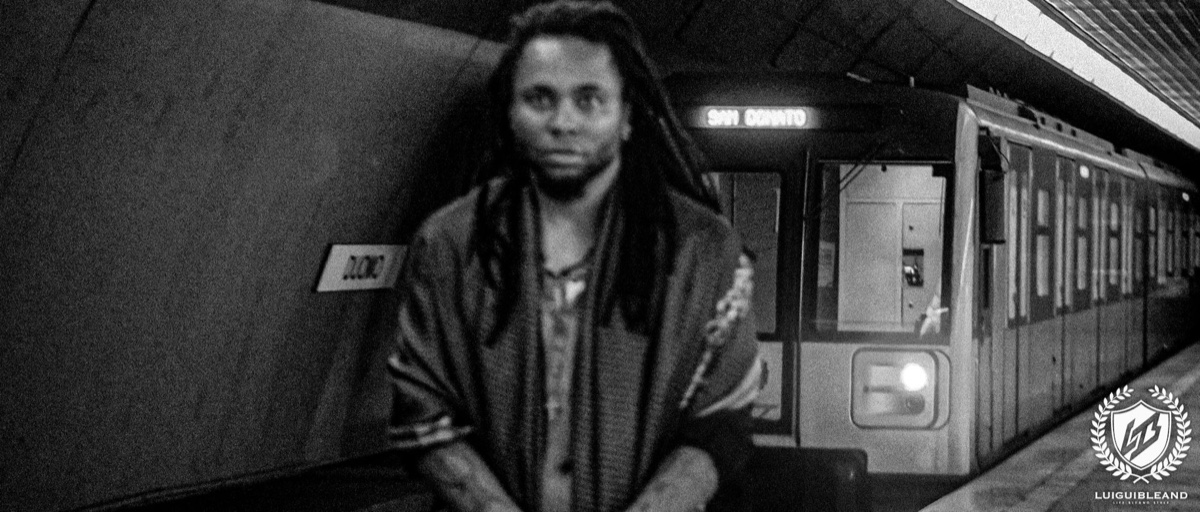 Milan, Italy
MILAN, ITALY — Nobody wakes up one morning and says: today I am going to go looking for trouble. Quite the opposite. You were trying to do the best you could, with good intentions, doing your part. But it did not work out. Instead of things going as well as they could, everything turned into a problem and the situation got complicated. Something you were not expecting and never went looking for, but it happened anyway.
It has happened to all of us in some way. The favour you did from the heart that ended in a misunderstanding. The family conversation that was meant to fix things and only made them worse. The studio session you gave everything to prepare for, where nothing sounded the way it should. And after the blow comes the part nobody sees: going over it again and again, thinking you should have seen it coming.
Something done with good intentions coming out wrong is nothing new. In 1936, in the American Sociological Review, the sociologist Robert K. Merton, aged 26, wrote about the unanticipated consequences of purposive action: we act on purpose, with a clear aim, and something else comes of it. Among the causes he points to how little we sometimes know, the mistake of assuming that what worked before will keep working, and the urgency of the immediate, which keeps us from looking at what comes next. And he adds something very true: acting sensibly is not the same as succeeding. You can choose the path with the best chance, based on what you knew at the time, and still not get there, while sometimes a hunch works out. It is a theoretical essay with no data; he himself calls it no more than the briefest exposition. But it leaves an idea worth keeping: what nobody wanted does not always turn out to be bad.
Sometimes the hardest part is how your decision gets judged once everyone knows how it ended. In 1988, in the Journal of Personality and Social Psychology, the researchers Jonathan Baron and John Hershey asked students at the University of Pennsylvania to rate other people’s decisions, knowing what the decision maker knew. In one case, a 55-year-old man with a heart condition could have an operation: it would relieve his pain and raise his life expectancy from 65 to 70, but 8% of the people who have it die from the operation. When the doctor chose to operate and it went well, the decision averaged 0.85 on a scale from +3 to −3; the same decision, when the operation failed, −0.05. Of the last eight participants, seven said afterwards that the outcome should not count, and it counted for them anyway. There were only 20 students in that first experiment, with hypothetical cases, and the authors acknowledge that the outcome can reasonably carry weight when the person rating the decision does not know what the decision maker knew.
And it did not stop there. In 2023, in the International Review of Social Psychology, Aiyer and five colleagues repeated the experiment online with 692 adults in the United States, following a plan registered in advance: the decision averaged 1.78 when it ended well and 0.68 when it ended badly, and the bias appeared even among those who said the outcome should not count. They caution that they tested a single scenario and that the finding should not be generalised. Baron and Hershey suggest, without having measured it, that people who measure themselves by the outcome may end up treating good and bad luck alike as their own doing: full of themselves when things go well and full of self-reproach when they go badly. That sounds familiar to me.
Then comes the other trap: thinking you should have seen it coming. In 1975, in the Journal of Experimental Psychology: Human Perception and Performance, the psychologist Baruch Fischhoff gave university students in Israel short texts on little-known historical or clinical cases, each with four possible outcomes. Some were not told the ending; others were told that one of them was what had really happened. In a war between the British and the Gurkhas that began in 1814, those who did not know the ending gave a British victory, on average, a 33.8% probability; those who had read that the British won, 57.2%. That was the largest jump in the study: across the 24 comparisons the increase ranged from 3.6 to 23.4 points, 10.8 on average. But in every one, knowing the ending made it look more likely. And when he asked others to answer as if they did not know it, the effect barely went down. These were students looking at brief, distant cases, not at their own lives.
Towards the end of the paper, Fischhoff describes the person who looks back and blames himself for not doing what now seems obvious, and who may in that way “add the insult of regret to the injury inflicted by the event itself”. That is his argument, not something he measured. But when I put it all together, I see two blows where there seemed to be one: the problem you did not go looking for, and the way it gets looked at afterwards, by other people and by you, with information you did not have before. The first often cannot be avoided. The second can be reviewed, although these same studies suggest that knowing the bias exists is not enough to erase it. When I get something wrong, I want to know about it and learn from it. But a bad decision is not the same as a good decision that ran into a bad outcome.
Then there is the question of how long it will last. In 1998, in the Journal of Personality and Social Psychology, the psychologist Daniel Gilbert and four colleagues published six studies, involving more than a thousand people, on blows such as a romantic break-up or being turned down for a job. On the whole, people overestimated how long the pain would last. At the University of Texas at Austin, assistant professors awaiting a tenure decision believed that, if they were turned down, their happiness over the next five years would be around 3.42 out of 7; those who had actually been turned down in the previous five years were at 4.71. The groups were small – seven people in that case – replying was voluntary, and over the long term the forecasts were in fact fairly accurate. As an explanation, which they tested in other studies in the paper, the authors speak of immune neglect: when we picture the future, we do not count on the quiet ways the mind recovers. They do not say it does not hurt. They say it often hurts for less time than you think.
Sometimes I wish some things were different. But over time I have learned to accept what is not in my hands and to look after what is: my time, my peace and what makes me happy. What has happened has happened. What we do now is up to us: how we respond, what we learn, what the next step is. And, as Merton said, not everything that arrives uninvited turns out to be bad. Time puts each thing in its place, little by little. Live every step of the process.
If you are in the middle of something today that got complicated even though you never went looking for it, split it in two: what you did with what you knew, and what happened afterwards. Be honest with yourself about the first, without being harsh. Give the second time. Hold your course, work with what you have and keep moving forward, at your own pace. When your moment comes, may it find you sailing. And if you know someone who did something with good intentions and watched it get complicated, do not ask them why they did not see it coming. Ask them how they are, and remind them that they are not alone: they have the people who love them, and God.